


For nearly a century, the ACLU has defended the freedom to read and to think for every American. As we approach the holiday season, we’ve selected a list of books about civil liberties, fitted perfectly with some of our most popular products to make the perfect gift for family members and friends.
This holiday season, we’re celebrating the power of stories with a curated collection of books, paired with unique items from the ACLU Shop, such as our banned book collection, aprons, tote bags, and more. Whether you’re gifting a thought-provoking read or a statement-making accessory, each purchase supports the ACLU’s mission to protect free speech and the right to learn.
Since 2021, thousands of book titles have been challenged or removed from school libraries, often targeting BIPOC authors, LGBTQ+ creators, and other marginalized voices. These efforts to ban books and restrict discussions, especially on race, gender, sexuality, and systemic injustice, are both unlawful and a serious threat to our right to learn.
Our series, “ACLU Bookshelf,” lets you join our fight and pick up the texts, novels, nonfiction stories, essays, and more that help us form a more perfect union – one page at a time.
So you need a gift for …
THE HISTORY BUFF
“Wake: The Hidden History of Women-Led Slave Revolts” by Rebecca Hall
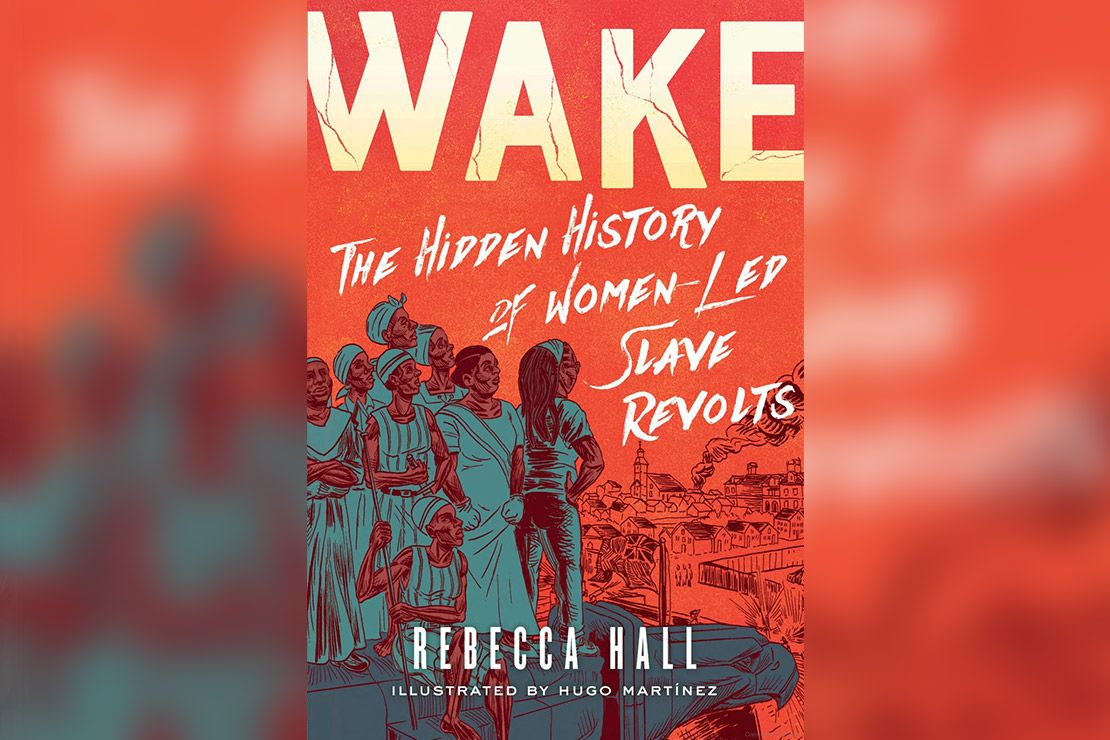
“Wake: The Hidden History of Women-Led Slave Revolts” by Rebecca Hall is a blend of memoir, history, and graphic novel. Hall, a historian and granddaughter of enslaved people, investigates the overlooked pasts of Adono and Alele, women rebels who led and fought in slave revolts during the transatlantic slave trade. Combining archival research with historical imagination, she shows how women’s resistance has been erased from history. The book also chronicles how Hall faced racism, sexism, and institutional barriers throughout her research.
A Look Inside: “They say that the trauma of our ancestors are stored inside us: in our bodies, our minds, our spirits. So too is our resilience.”
“Wake: The Hidden History of Women-Led Slave Revolts” by Rebecca Hall is a blend of memoir, history, and graphic novel. Hall, a historian and granddaughter of enslaved people, investigates the overlooked pasts of Adono and Alele, women rebels who led and fought in slave revolts during the transatlantic slave trade. Combining archival research with historical imagination, she shows how women’s resistance has been erased from history. The book also chronicles how Hall faced racism, sexism, and institutional barriers throughout her research.
A Look Inside: “They say that the trauma of our ancestors are stored inside us: in our bodies, our minds, our spirits. So too is our resilience.”
THE FRIEND WHO ENJOYS BANNED BOOKS…
“The Color Purple” by Alice Walker
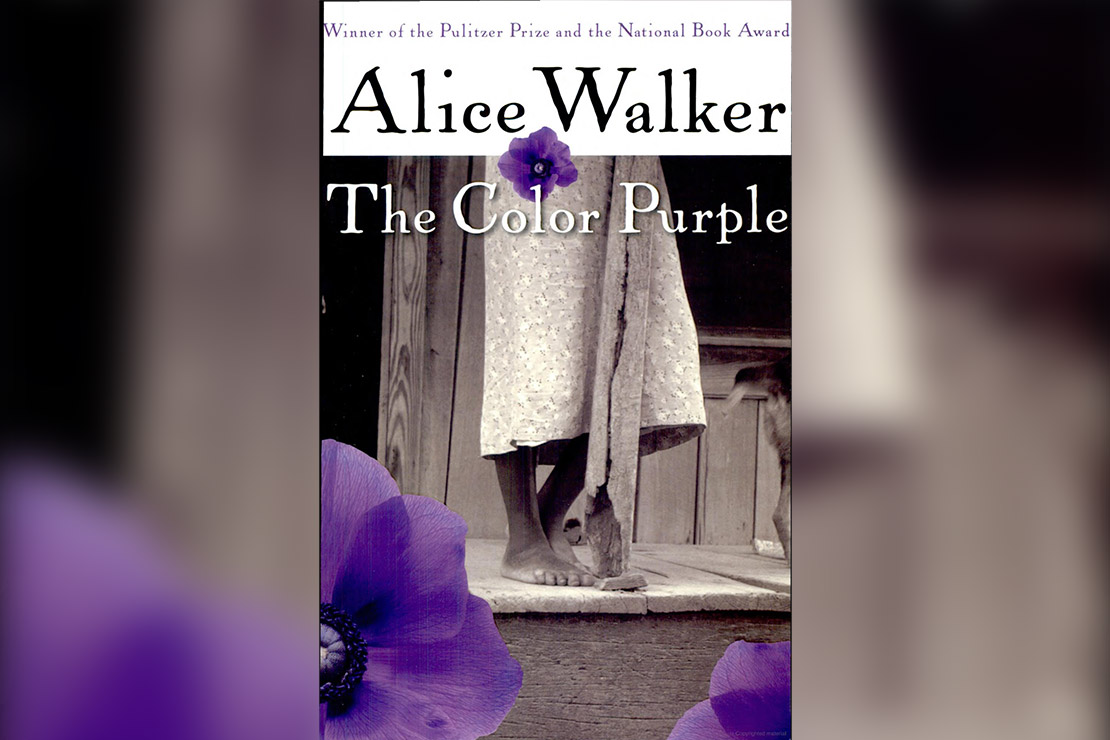
“The Color Purple” by Alice Walker is a novel set in the early 20th-century in Georgia. Told through letters between sisters Celie and Nettie, the novel spans 20 years of separation, faith, and love. The novel explores themes of abuse, oppression, and resilience and breaks the silence around domestic and sexual violence. Because of this, it has been frequently banned in school libraries. The story becomes a powerful journey of healing, self-discovery, redemption, and the transformative strength of love.
A Look Inside: “I am an expression of the divine, just like a peach is, just like a fish is. I have a right to be this way...I can't apologize for that, nor can I change it, nor do I want to... We will never have to be other than who we are in order to be successful...We realize that we are as ourselves unlimited and our experiences valid. It is for the rest of the world to recognize this, if they choose.”
“The Color Purple” by Alice Walker is a novel set in the early 20th-century in Georgia. Told through letters between sisters Celie and Nettie, the novel spans 20 years of separation, faith, and love. The novel explores themes of abuse, oppression, and resilience and breaks the silence around domestic and sexual violence. Because of this, it has been frequently banned in school libraries. The story becomes a powerful journey of healing, self-discovery, redemption, and the transformative strength of love.
A Look Inside: “I am an expression of the divine, just like a peach is, just like a fish is. I have a right to be this way...I can't apologize for that, nor can I change it, nor do I want to... We will never have to be other than who we are in order to be successful...We realize that we are as ourselves unlimited and our experiences valid. It is for the rest of the world to recognize this, if they choose.”
THE FAMILY MEMBER WHO LOVES TO TALK POLITICS
“Original Sins: The (Mis)education of Black and Native Children and the Construction of American Racism” by Eve L. Ewing
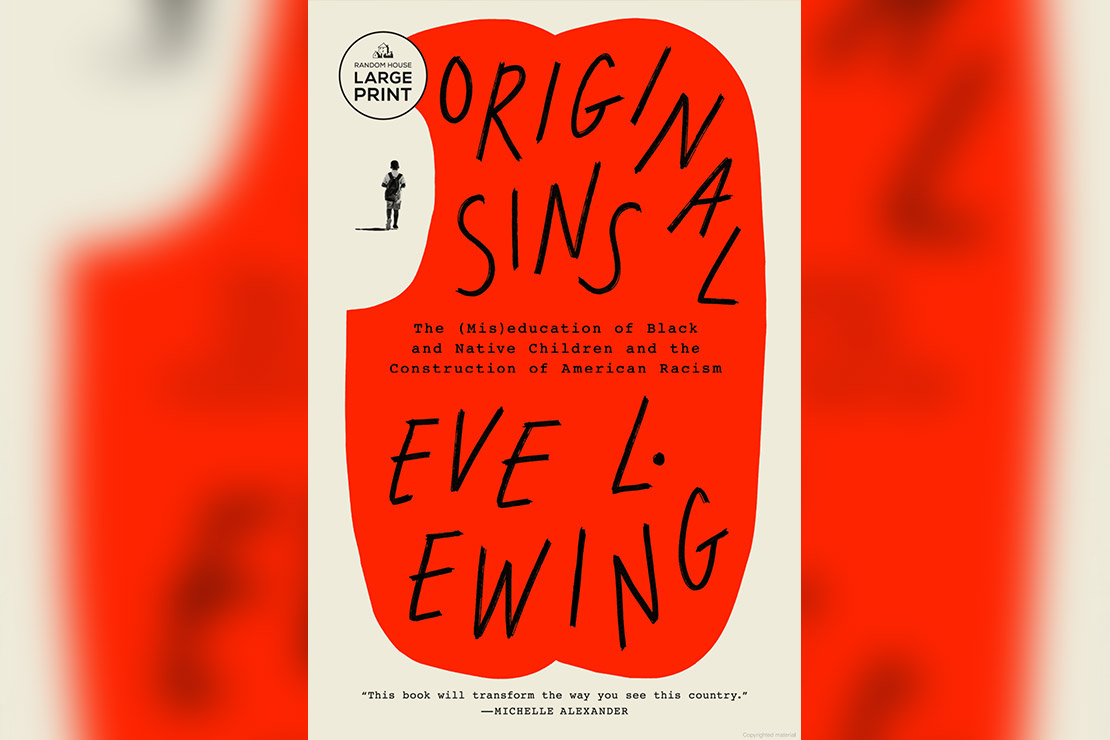
In “Original Sins,” Eve L. Ewing reveals how the U.S. education system was built to uphold racial hierarchies rather than promote equality. Tracing its origins to the nation’s founding, she shows how schools were designed to “civilize” Native children, train Black students for servitude, and reinforce white intellectual superiority. Ewing argues that these structures persist today through biased curriculum, standardized testing, academic tracking, and unequal resources. Exposing how education continues to sustain systemic inequality, she challenges readers to reconsider what schools are supposed to do, and for whom.
A Look Inside: “Just as the project of empire required fundamentally unintelligent beings, wild savages in need of discipline, so too did it require beings permanently positioned on the bottom rungs of the economic hierarchy. And educational institutions, once again, have played a vital role in reinforcing this narrative and the structures beneath it.”
In “Original Sins,” Eve L. Ewing reveals how the U.S. education system was built to uphold racial hierarchies rather than promote equality. Tracing its origins to the nation’s founding, she shows how schools were designed to “civilize” Native children, train Black students for servitude, and reinforce white intellectual superiority. Ewing argues that these structures persist today through biased curriculum, standardized testing, academic tracking, and unequal resources. Exposing how education continues to sustain systemic inequality, she challenges readers to reconsider what schools are supposed to do, and for whom.
A Look Inside: “Just as the project of empire required fundamentally unintelligent beings, wild savages in need of discipline, so too did it require beings permanently positioned on the bottom rungs of the economic hierarchy. And educational institutions, once again, have played a vital role in reinforcing this narrative and the structures beneath it.”
YOUR PROTEST BUDDY
“Civil Disobedience” by Henry David Thoreau
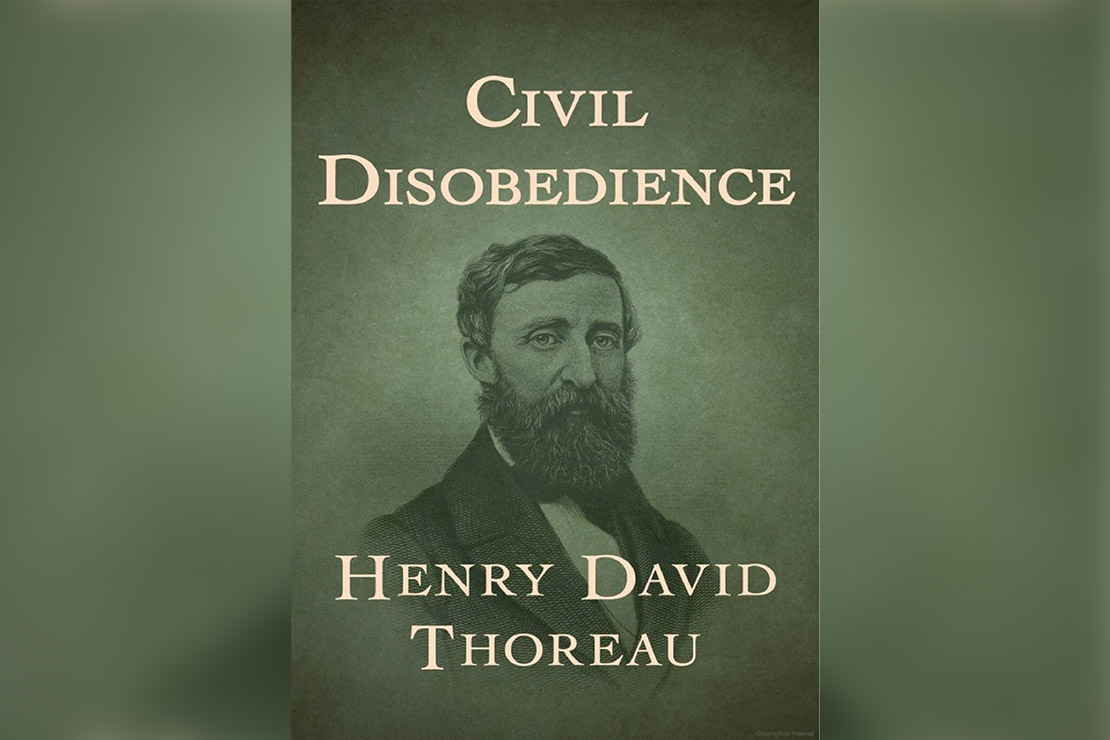
Published by transcendentalist Henry David Thoreau, “Civil Disobedience” is a foundational essay advocating for individual conscience over government authority. Thoreau argues that people must not permit governments to override their moral judgment and have a duty to resist unjust laws. Prompted by his opposition to slavery and the Mexican-American War, he protested through his writings, by refusing to pay taxes, abolitionism, and through his non-material, simple lifestyle. Thoreau emphasizes nonviolent resistance and the power of individual integrity in confronting injustice. His ideas profoundly influenced later movements, shaping global understandings of protest, morality, and the responsibilities of citizenship.
A Look Inside: “If we were left solely to the wordy wit of legislators in Congress for our guidance, uncorrected by the seasonable experience and the effectual complaints of the people, America would not long retain her rank among the nations.”
Published by transcendentalist Henry David Thoreau, “Civil Disobedience” is a foundational essay advocating for individual conscience over government authority. Thoreau argues that people must not permit governments to override their moral judgment and have a duty to resist unjust laws. Prompted by his opposition to slavery and the Mexican-American War, he protested through his writings, by refusing to pay taxes, abolitionism, and through his non-material, simple lifestyle. Thoreau emphasizes nonviolent resistance and the power of individual integrity in confronting injustice. His ideas profoundly influenced later movements, shaping global understandings of protest, morality, and the responsibilities of citizenship.
A Look Inside: “If we were left solely to the wordy wit of legislators in Congress for our guidance, uncorrected by the seasonable experience and the effectual complaints of the people, America would not long retain her rank among the nations.”
THE FRIEND WHO ONLY READS FICTION
“James” by Percival Everett
A re-imagined version of “The Adventures of Huckleberry Finn,” “James” by Percival Everett is told from the perspective of Jim, the enslaved man in the original novel, renamed as James. Set in 19th-century Missouri, James is intellectually curious and literate, but hides his intelligence behind “slave talk” to survive. When he learns he will be sold away from his wife and daughter, he escapes and joins Huck on a raft journey down the Mississippi, reclaiming agency, teaching others to read, and confronting the brutal realities of slavery and identity.
A Look Inside: “At that moment the power of reading made itself clear and real to me. If I could see the words, then no one could control them or what I got from them. They couldn’t even know if I was merely seeing them or reading them, sounding them out or comprehending them. It was a completely private affair and completely free and, therefore, completely subversive.”
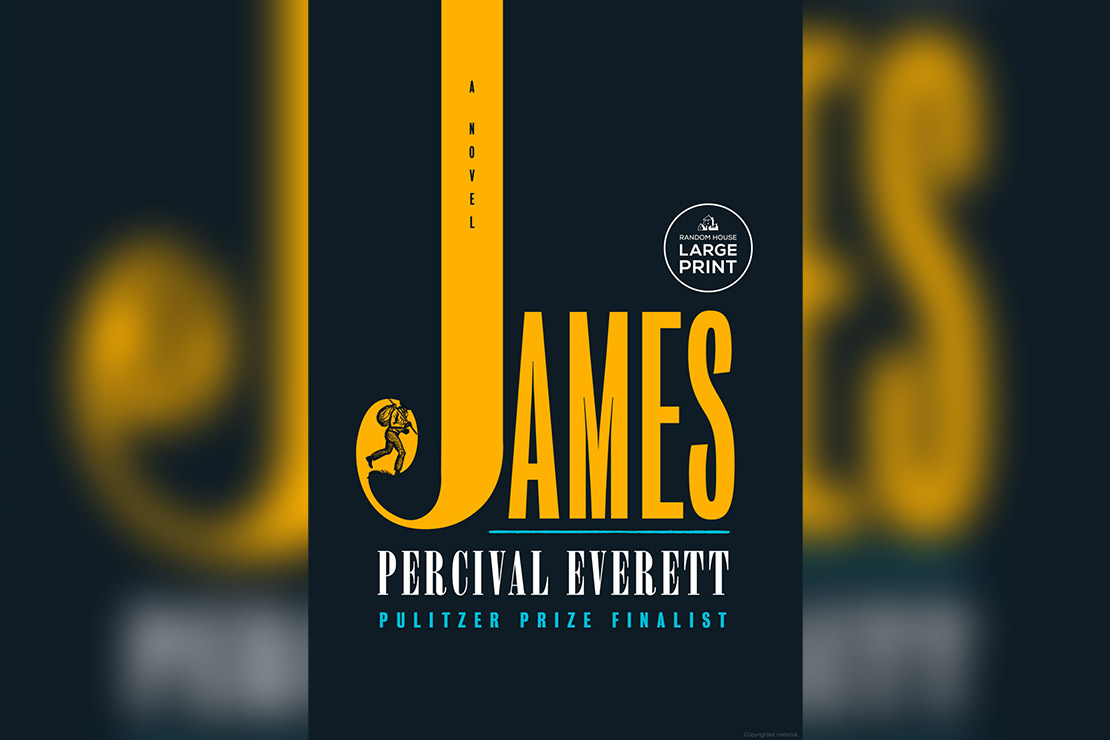
A re-imagined version of “The Adventures of Huckleberry Finn,” “James” by Percival Everett is told from the perspective of Jim, the enslaved man in the original novel, renamed as James. Set in 19th-century Missouri, James is intellectually curious and literate, but hides his intelligence behind “slave talk” to survive. When he learns he will be sold away from his wife and daughter, he escapes and joins Huck on a raft journey down the Mississippi, reclaiming agency, teaching others to read, and confronting the brutal realities of slavery and identity.
A Look Inside: “At that moment the power of reading made itself clear and real to me. If I could see the words, then no one could control them or what I got from them. They couldn’t even know if I was merely seeing them or reading them, sounding them out or comprehending them. It was a completely private affair and completely free and, therefore, completely subversive.”
FOR THE KIDS
"A is for Activist" by Innosanto Nagara
“A is for Activist” is an alphabet board book that introduces the next generation of progressives to social justice, activism, and community engagement. For families who want their kids to grow up in a space that is unapologetic about equality, environmentalism, LGBTQ+ rights, collective action, and more.
A Look Inside: “A is for Activist. Advocate. Abolitionist. Ally. Are you an Activist?”
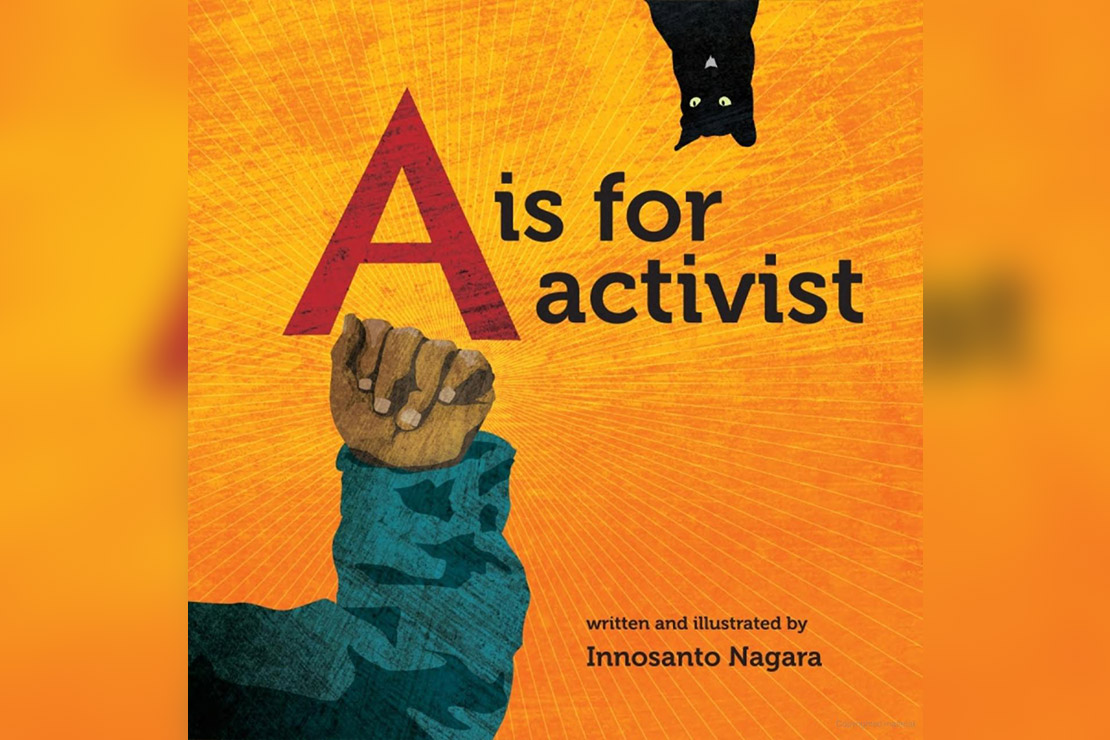
“A is for Activist” is an alphabet board book that introduces the next generation of progressives to social justice, activism, and community engagement. For families who want their kids to grow up in a space that is unapologetic about equality, environmentalism, LGBTQ+ rights, collective action, and more.
A Look Inside: “A is for Activist. Advocate. Abolitionist. Ally. Are you an Activist?”
FOR THE HOLIDAY CHEF
“We Fed an Island The True Story of Rebuilding Puerto Rico, One Meal at a Time” by José Andrés
“We Fed an Island” tells the true story of how Chef José Andrés and his team responded to the humanitarian crisis after Hurricane Maria devastated Puerto Rico. Arriving just days after the storm, Andrés confronted widespread destruction. There was no food, water, power, or communication. He began feeding people one meal at a time. From cooking at ruined restaurants to preparing 100,000 meals daily across multiple kitchens, he provided sustenance while highlighting systemic inefficiencies in disaster relief. The book shows how community-driven action can create real change, offering lessons for future crises, and supporting ongoing relief through World Central Kitchen.
A Look Inside: “There is no recovery to manage, and no citizens to govern, if we cannot get water and food to the people.”
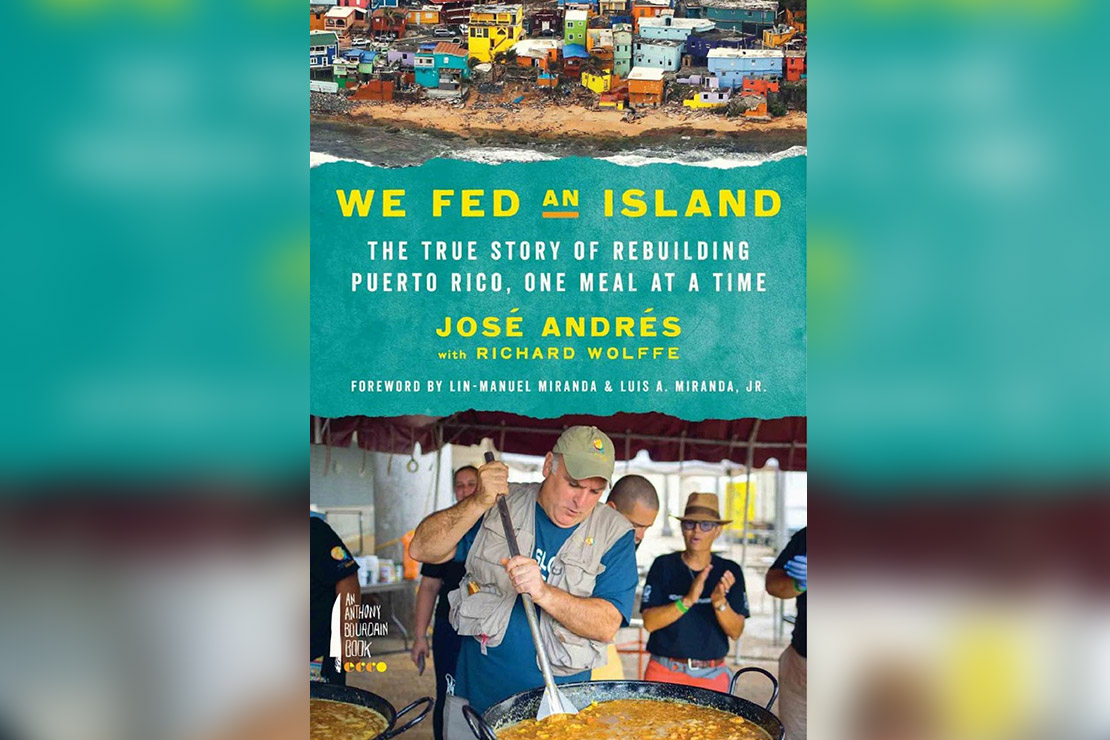
“We Fed an Island” tells the true story of how Chef José Andrés and his team responded to the humanitarian crisis after Hurricane Maria devastated Puerto Rico. Arriving just days after the storm, Andrés confronted widespread destruction. There was no food, water, power, or communication. He began feeding people one meal at a time. From cooking at ruined restaurants to preparing 100,000 meals daily across multiple kitchens, he provided sustenance while highlighting systemic inefficiencies in disaster relief. The book shows how community-driven action can create real change, offering lessons for future crises, and supporting ongoing relief through World Central Kitchen.
A Look Inside: “There is no recovery to manage, and no citizens to govern, if we cannot get water and food to the people.”