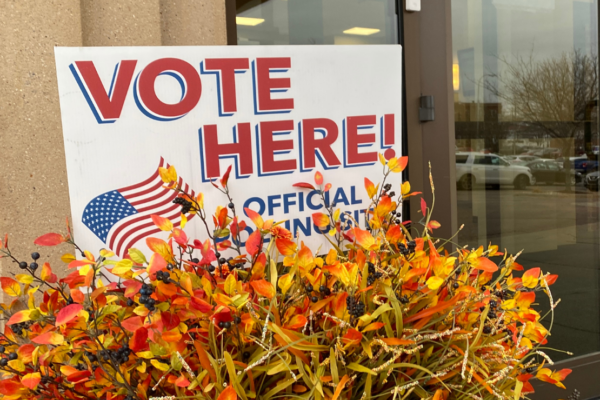

Voting should be accessible, transparent, and fair.
But new voter registration requirements enacted when Senate Bill 175 passed and was signed into law in March are creating confusion that could prevent eligible voters from casting their ballot in local races.
The bill changed South Dakota’s laws on registration and the kinds of ballots voters get. It requires that first-time registrants show proof of citizenship in the form of a birth certificate, passport, driver’s license, non-driver’s identification card, or tribal identification card, or “any other type of acceptable documentation” under federal law. A photocopy of that proof is acceptable for any of those forms except a state- or tribally issued identification card.
Voters deserve accurate information about what is required – and election officials deserve clear guidance on how to administer the law consistently. The South Dakota League of Women Voters has proposed guidance that would clarify how Senate Bill 175 is enacted. This guidance includes amending the South Dakota voter registration form to include a list of acceptable documentation to prove U.S. citizenship, clarifying voter registration instructions, and plainly stating the consequences to a voter who does not submit the required documentary proof of citizenship with their voter registration form.
The ACLU of South Dakota supports the League of Women Voters’ work and is urging the Board of Elections to adopt the proposed election guidance at their next meeting on July 8.
Clear Information Protects Our Right to Vote
Anyone registering to vote for the first time in South Dakota now has to provide documented proof of U.S. citizenship. If a voter fails to provide this documentation, they will be registered as a “federal-only” voter. Federal-only voter means an individual who is eligible to vote in elections for presidential electors, United States senator, or United States representative at a primary, runoff, special, or general election. Federal voters are not permitted to vote in state or local elections.
The problem is, South Dakota’s voter registration form does not clearly explain this additional documentary proof of citizenship requirement now in place. That confusion has real consequences.
For example, a voter who finds the registration form online, downloads the fillable form, and mails it in will not receive any instruction about the new requirements or the consequences of failing to submit adequate documentary proof of citizenship.
Eligible voters should not lose access to the ballot because the state failed to provide clear instructions.
Setting expectations from the beginning of a voter’s experience, during voter registration, will help alleviate confusion and enable voters to prepare the correct documentation with their voter registration before it’s too late — especially if a voter is registering close to the voter registration deadline before an election.
Consistent Rules Matter
The South Dakota Secretary of State’s current guidance to county auditors requires that driver licenses, state-issued ID cards, and tribal identification cards be presented as original physical documents, not photocopies, to establish proof of citizenship. That directly contradicts the plain text of the law and the guidance issued to state agencies providing public benefits where voters can register.
The statute lists driver licenses and tribal IDs among documents acceptable under the same federal regulation (42 C.F.R. § 436.407) that explicitly permits photocopies of those same documents as proof of citizenship. The Secretary of State’s own guidance for voter registration at public assistance offices also accepts photocopies of these documents.
If a photocopy is sufficient for an auditor to verify eligibility in that context, requiring an original from someone who mails in their registration cannot be said to be material to determine their eligibility. This is the standard under the Civil Rights Act, and the current guidance does not meet it.
The result is inconsistency across counties. Some county auditors accept photocopies of tribal identification cards. Others require voters to appear in person with original documents.
Voters in different counties are being treated differently based on the manner in which they might present the exact same documents, raising serious due process concerns. The impact of this inconsistent application of the law falls hardest on Native voters, rural voters, and voters who may have limited access to transportation or nearby issuing agencies.
The guidance proposed by the League of Women Voters would resolve inconsistencies between counties, reduce auditor liability caused by the current violation of the Materiality Provision of the Civil Rights Act, and most importantly, keeps eligible voters from being turned away over a form requirement that is currently allowed at public benefit offices.
Name Changes Shouldn’t Become Voting Barriers
While women have had the right to vote in South Dakota for more than 100 years, they have never been required to provide documentation for changing their name after getting married or divorced when exercising their fundamental right to register to vote.
Over 200,000 South Dakota women have a birth certificate that no longer matches their current legal name. Under SB 175, the documents they are required to present to register to vote now depends entirely on which county they’re in — because the state has issued no uniform guidance.
That inconsistency could result in disenfranchising countless first-time women voters from having a voice in our state and local elections in the middle of a historic election cycle for South Dakota.
The League’s proposed fix is workable and legally sound: a clear rule specifying that a signed affidavit, marriage certificate, or similar documentation is sufficient when a voter’s name on their proof of citizenship doesn’t match their current legal name.
Voters Deserve Accurate Notices
When a South Dakotan is registered as a federal-only voter, they deserve to know — clearly, promptly, and accurately — what that means and what they can do about it. Right now, that is not happening.
Currently, the notice generated by the TotalVote system tells every federal-only voter that they used a mail forwarding address without describing their residence. That is the only explanation the system produces, regardless of why the voter ended up with a federal-only designation. A voter registered as federal-only because they didn’t provide proof of citizenship receives a notice that doesn’t accurately describe their situation, doesn’t tell them what went wrong, and doesn’t tell them how to fix it.
The ACLU has heard from voters registered in South Dakota for years who had no idea they were re-designated as federal-only voters until they showed up to vote and found their ballot was limited. Not because they were ineligible, but because the notice they received in the mail failed them.
The League’s proposed guidance would require the notice sent to federal-only voters to state the actual reason for federal-only designation, explain what that status means for the voter’s ballot, identify what documents the voter can provide to become a full-ballot voter, and explain how to do that.
The Sioux Falls mayoral race came down to two votes, meaning that hundreds of voters designated federal-only could have changed the outcome of the election, had they been properly notified of their designation and provided an opportunity to cure, and therefore would have been permitted access to the full ballot. In November, with competitive legislative races across the state, math applies everywhere.
That isn’t a partisan issue. It’s fundamental fairness.
Democracy Works Best When Everyone Can Participate
The June primary produced the highest turnout South Dakota has seen in a primary election since 2008. South Dakotans made the effort to show up. The voters receiving rejection notices are, in spirit, that same group — people who took the step of trying to register, which means they want to participate. An unclear or incomplete notice at that moment is a door closing in front of someone who was already walking through it.
Right now, a voter whose registration is rejected may receive a notice that doesn’t clearly explain what was missing, what they need to do to fix it, or that they have a right to appeal. Many of those voters will disengage — not because they gave up, but because nothing in the notice gave them reason to believe they had options.
The proposed rule requires those rejection notices to include a plain statement of the reason for rejection and inform voters of their right to appeal. That is the minimum a voter needs to have a realistic chance to fix the problem and still cast a ballot.
South Dakota just had its highest primary turnout in nearly 20 years. The general election this November will bring even more voters to the polls — including many navigating the proof-of-citizenship requirements under SB 175 for the first time. Getting these notices right is one of the most direct things this Board can do to make sure voters who are actively trying to participate get the information they need to succeed.